
Astrea: Six-Sided Oracles
Little Leo GamesCard
3.939.00 Reviews
- Version
- 1.2.1009
- Installs
- 10.00K
- Age Rating
- Everyone 10+
Screenshots
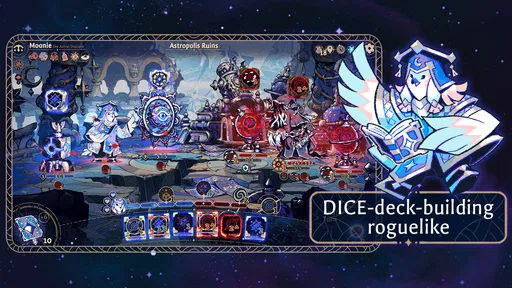
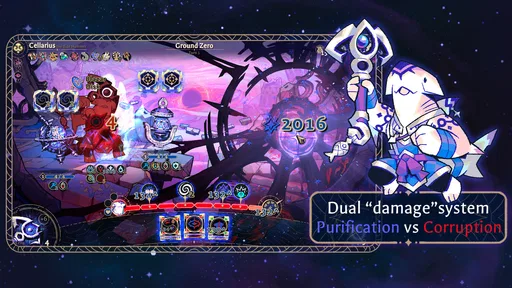
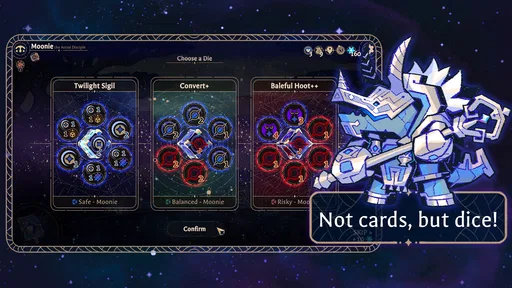
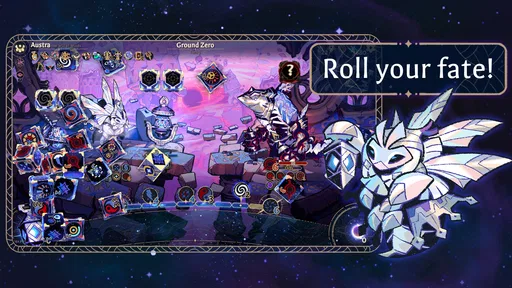
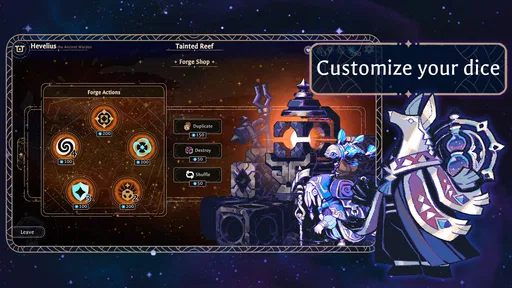
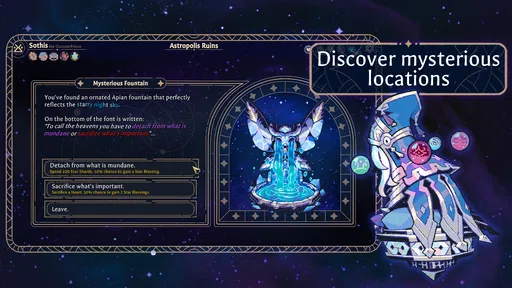
Our Review of Astrea: Six-Sided Oracles
 Analysis by Appyee
I approached Astrea: Six-Sided Oracles as a game to settle into rather than a quick distraction, and that expectation makes a difference. Its card-game category label only tells part of the story: dice sit at the center of the decisions, so you’re weighing planned effects against the uncertainty of a roll. I like that tension, though it means the game suits players who enjoy adapting more than those who want every turn to unfold exactly as planned.
Made by Little Leo Games, this is a paid game priced at $9.99, not a free download built around an optional purchase. It has a 3.9 average from around 227 ratings and more than 10K installs. Those figures suggest a modest audience rather than a universal crowd-pleaser, which fits a strategy-focused game better than a frictionless casual pick. The age rating is Everyone 10+, and the current version is 1.2.813 for Android 7.0 and later.
A useful way to approach a first run
The premise is easier to grasp once you focus on what a roll lets you do, rather than treating each die as a simple random attack. Oracles bring different abilities, and their dice offer different possible effects. In practice, that makes a turn a small planning problem: consider the options available, decide what matters most right now, then accept that chance may change the best next move.
My first practical tip is to avoid judging a strategy by one unlucky result. Pay attention to the decisions you made before the roll: which oracle you brought, what you hoped to accomplish, and whether that plan had a sensible alternative. When a result goes against you, that quick review helps distinguish a risky choice from ordinary bad luck. It also makes later attempts feel like learning rather than starting from scratch.
Settings and habits worth checking
I would begin with the controls and settings the game actually presents, then choose a comfortable way to play before a difficult stretch. I wouldn’t assume there are hidden shortcuts or special options to discover; the useful habit is simply to get comfortable with the interface and read the available choices carefully. If you play in short sessions, pause at a natural break rather than rushing a decision because you’re trying to finish one more encounter.
A second habit is to keep your experiments focused. Change one part of your approach at a time when possible, such as trying a different oracle combination or choosing a different priority in a battle. If you change everything at once, it’s harder to tell what helped. This is especially useful in a dice-driven game: you can’t control the roll, but you can make your own comparisons more informative.
Unveiling the Gameplay
Right off the bat, Astrea: Six-Sided Oracles sweeps you into a world where dice aren’t just tools of chance but instruments of destiny. The core premise revolves around using dice to summon oracles, each with unique powers and abilities. It’s like Pokémon but with a mystical twist. You’re tasked with building a team of these oracles, rolling the dice to unleash their potential in battles against formidable foes.
Each oracle is represented by a six-sided die, and each side offers different abilities. It’s a bit like crafting a strategy in chess, but with the unpredictable twist of a dice roll. The thrill lies in the balance between luck and strategy. While you can plan your moves, the roll of the dice adds an exhilarating element of unpredictability.
Visuals and Sound
Visually, the game is a treat. The artwork is stunning, with each oracle and environment crafted with intricate details. The colors pop, making each battle a vibrant spectacle. The sound design complements the visuals perfectly, with epic soundtracks that enhance the tension and excitement of every battle. It’s like being in a fantasy movie where you’re the hero.
The interface is clean and intuitive, so you don’t have to worry about getting lost in complex menus. Everything is where it should be, allowing you to focus on what really matters – strategizing your next move.
Features to Love
One of the standout features is the multiplayer mode, where you can pit your team against others online. It’s a fantastic way to test your strategies against real opponents, adding a competitive edge that keeps the game fresh and engaging.
Another highlight is the variety of oracles available. Each one brings something unique to the table, encouraging you to experiment with different combinations and strategies. Whether you prefer brute force or a more subtle approach, there’s an oracle for you.
The game also offers a rich storyline that unfolds as you progress. It’s not just about rolling dice; it’s about uncovering secrets and immersing yourself in a narrative that keeps you on the edge of your seat.
Challenges and Strategy
Now, let’s talk strategy. While luck plays a role, your success in Astrea: Six-Sided Oracles hinges on your ability to devise clever strategies. You need to think several moves ahead, anticipating your opponent’s actions and adapting on the fly. It’s a mental workout that’s as rewarding as it is challenging.
There are moments when the dice might not roll in your favor, but that’s where the game truly shines. It pushes you to think creatively, to adapt and overcome. Every battle is a learning experience, and the satisfaction of outsmarting your opponent with a well-timed move is unparalleled.
How it fits into a normal day
For a realistic evening routine, I’d start a session when I have enough attention to follow the battle rather than squeezing it into a moment when I’m distracted. A commute or a short break can work if you’re comfortable stopping at a sensible point, but the strategic choices are more enjoyable when you can think them through. The game’s appeal is not just the roll itself; it’s remembering what you were trying to achieve and responding when the result changes your options.
This also answers a practical question: is it a good background game? I wouldn’t choose it for that. The visual presentation and music are part of its appeal, and the decisions reward focus. If you want something you can play while barely looking at the screen, a simpler casual card game is probably a better fit.
When this dice-driven style works best
Compared with familiar card battlers, this game puts more emphasis on the changing possibilities represented by each die. That can make a plan feel flexible and lively, but it also means a carefully imagined sequence may not be available after a roll. Compared with a conventional dice game, the oracle choices give the uncertainty a strategic frame: you are not only hoping for a number, you are considering how a set of abilities can serve your current goal.
That distinction makes it a strong choice for players who like tactical adaptation, fantasy themes, and learning through repeated attempts. It is less suitable if you dislike randomness, want a purely relaxed game, or prefer building a deck with outcomes that feel more directly controlled. I’d also steer away from it if you’re buying mainly for a guaranteed competitive scene; multiplayer is part of the experience, but the best reason to play is the core strategic challenge, not an assumption about how active online matches will be.
Small decisions that make experimentation useful
One non-obvious way to get more from a run is to set a modest goal before you begin. Rather than trying to discover the perfect team immediately, ask whether a particular oracle combination gives you a more dependable answer to the situations you find difficult. That turns experimentation into a clear comparison instead of a string of guesses. It also keeps a loss from feeling wasted, because you can still learn whether your chosen approach was sound.
Another useful trade-off is to value adaptability over a spectacular best-case roll. A setup that looks exciting when everything lines up can feel brittle when chance goes elsewhere. When deciding what to try next, I’d consider whether the plan still gives you a reasonable move after an imperfect result. That question is more useful than simply asking which option appears strongest, because the whole appeal of the game is making choices under uncertainty.
Where the learning curve can slow you down
The same uncertainty that gives the battles their character can frustrate anyone who expects strategy to mean full control. Planning ahead is worthwhile, but a plan has to leave room for the roll. If I’m in a losing stretch, I find it more helpful to revisit my decisions and adjust one thing than to assume the game owes me a favorable outcome next time. That mindset will not remove the randomness; it does make it easier to decide whether another run sounds fun.
The interface may be approachable, yet strategic clarity still takes attention. New players should give themselves time to understand what their oracles can do before judging the depth of a build. If you want a game that explains everything through a very light first impression, this may ask more patience than you want to give. Conversely, players who enjoy gradually spotting interactions are likely to find that early learning period worthwhile.
Who I’d recommend it to
I’d recommend this to someone who enjoys turn-based decisions, fantasy settings, and the satisfying puzzle of making a workable plan from uncertain results. It can also suit a player who likes replaying a challenge with a different combination rather than expecting one fixed route to solve everything. The paid entry price makes it a more deliberate choice than a free game, so I’d buy it for that particular appetite for tactical play, not simply because the dice theme looks appealing.
If your priority is a quick, low-effort pastime, a standard casual card game is likely the easier option. If you want every outcome to be determined chiefly by carefully managed cards, a traditional deck-building game may be more comfortable. I’d skip this one if random rolls routinely spoil your enjoyment, or if online competition is the only feature that would persuade you to play. Its strongest case is the blend of dice uncertainty, oracle variety, and a story-led fantasy setting.
Final Thoughts
In the end, Astrea: Six-Sided Oracles is more than just a game. It’s an adventure that challenges your mind while delighting your senses. Whether you’re a seasoned strategist or a newcomer looking for a fresh experience, this game has something for everyone.
So, what are you waiting for? Dive into the world of oracles, roll the dice, and let destiny guide your path. Head over to our website for more information and download links. Trust me, you won’t regret it.
My more measured verdict is that it has a distinctive hook and rewards patience, but it is not an automatic recommendation for every card-game fan. The 3.9 average reflects a game with an audience, not a guarantee that its chance-driven decisions will suit you. I’d choose it when I’m in the mood to think, adapt, and learn from a run; I’d choose another game when I want calm, predictable progress. That is the clearest way to decide whether its particular mix is right for you.
Verdict
Strengths of Astrea: Six-Sided Oracles
- Unique hexagonal puzzle gameplay.
- Beautiful, immersive graphics.
- Engaging story elements.
- Smooth and intuitive controls.
- Regular updates with new challenges.
Limitations of Astrea: Six-Sided Oracles
- Steep learning curve for beginners.
- Can be resource-intensive on older devices.
- In-app purchases can be pricey.
- Limited offline functionality.
- Occasional connectivity issues.
Similar Picks in This Category
View All
Solitaire - Classic Card Games
MobilityWare4.6

UNO!™
Mattel163 Limited4.3

Spider Solitaire: Card Games
MobilityWare4.6

Solitaire.com - Classic Cards
Tripledot Studios Limited4.7

Plants vs. Zombies™ Heroes
ELECTRONIC ARTS4.1

Hearthstone
Blizzard Entertainment, Inc.4.1
Frequently Asked Questions
What is the main objective of Astrea: Six-Sided Oracles?
Astrea: Six-Sided Oracles is a strategic, turn-based game where players use dice to summon powerful oracles and defeat their opponents. The main objective is to build a strong deck of oracles and strategically utilize their abilities to outmaneuver and outsmart your opponents in various challenges.
Is Astrea: Six-Sided Oracles free to play?
Yes, Astrea: Six-Sided Oracles is free to download and play. However, it offers in-app purchases that can enhance the gameplay experience by providing additional oracles, skins, and resources. Players can choose to purchase these items to progress faster or customize their gameplay experience.
What platforms is Astrea: Six-Sided Oracles available on?
Astrea: Six-Sided Oracles is available on both Android and iOS platforms. You can download it from the Google Play Store for Android devices and the Apple App Store for iOS devices. Ensure your device meets the minimum system requirements for optimal performance.
Does Astrea: Six-Sided Oracles require an internet connection?
Yes, Astrea: Six-Sided Oracles requires an internet connection to access all its features, including multiplayer modes and regular updates. While some solo gameplay elements can be accessed offline, the full experience, including community events and leaderboards, needs a stable connection.
Can I play Astrea: Six-Sided Oracles with friends?
Absolutely! Astrea: Six-Sided Oracles offers a multiplayer mode where you can challenge your friends or team up in cooperative modes. You can connect with friends through social media integrations or invite them directly via the app. It’s a great way to enjoy strategic battles together.
Play our best games!


